What Causes Online Booking Systems to Hurt the Guest Experience?

Online booking systems can make or break the guest experience at your property. And, believe it or not, your digital channels are the first impression someone has of your property. If they’re met with disconnected, outdated systems, your revenue will suffer, as they’ll shop somewhere that supports their booking needs, when they need it.
You invest in the onsite experience to help guests feel as relaxed as possible, but none of that matters if booking is disjointed and frustrating. If guests hit friction straight away, they’re likely to book with another property that lets them book what they want, when they want and how they want.
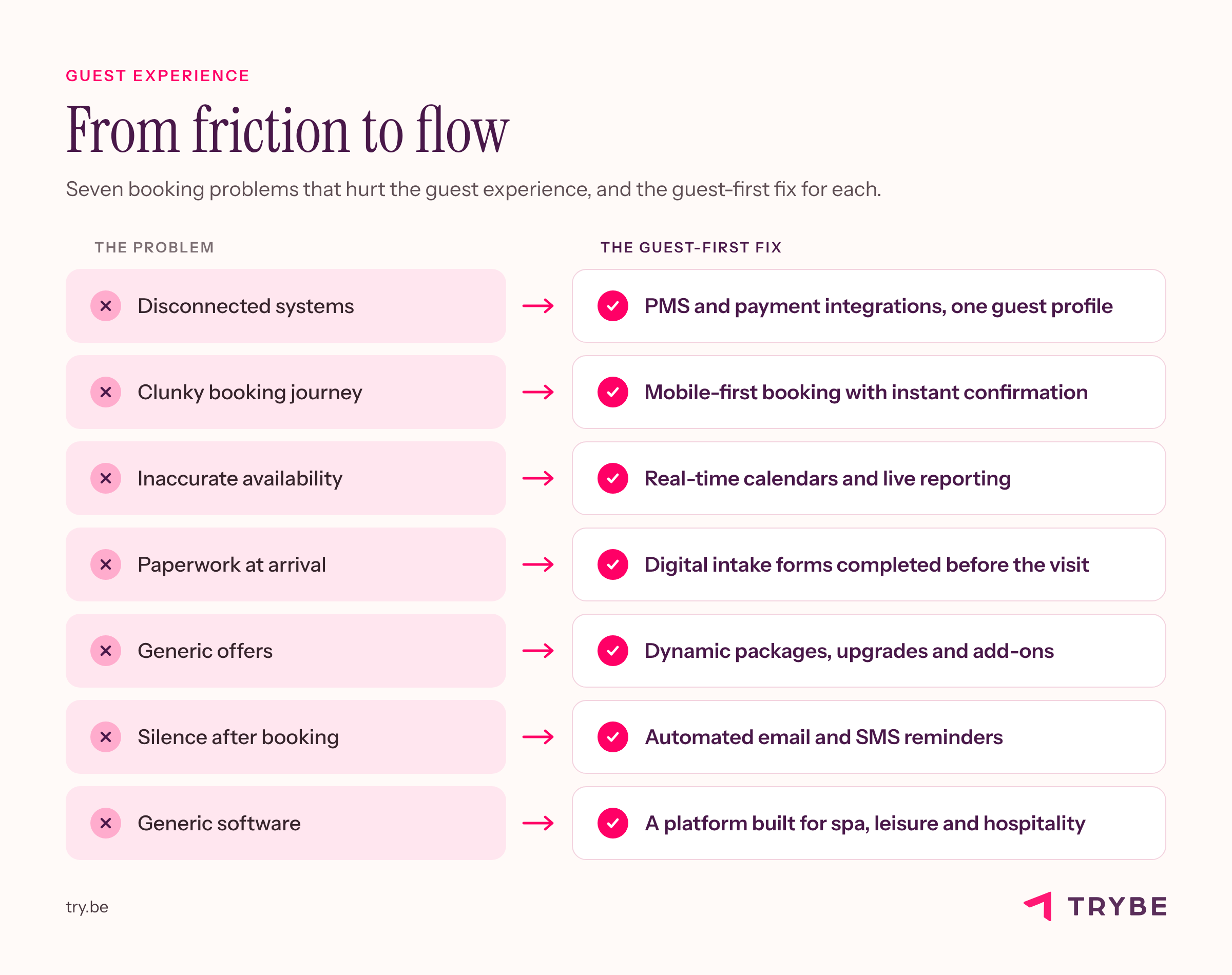
Below are the five most common tech causes of these frustrations, and what a guest-first booking system does differently.
1. Systems that don't talk to each other
When your booking engine, property management system (PMS) and payment processor run separately, guests feel the gaps. Room guests can't add a spa day to their bill. Details given at booking get asked for again at check-in. Staff re-key data between screens, and errors creep in.
Integrations fix this at the root. Connecting your booking platform to your PMS, CRM, F&B software and payment partners means one guest record, accurate charges and reports you can trust. When picking a spa software provider: a good partner should solve problems, not create new ones.
What to look for: native PMS and payment integrations, a single guest profile and an open API.
2. A clunky journey from website to payment
Guests book their stay when it suits them, not when your reception desk is open. 51% of bookings are made outside traditional working hours, and if your property doesn’t allow for online bookings, chances are they’ll book a stay somewhere that does. The more barriers to entry for a guest, if your system forces them to call, email or fight through a desktop-only form on their phone, the more likely it is that they won’t book with you.
Common friction points include:
Too many clicks between choosing a treatment and paying
Pages that aren’t mobile friendly
Limited payment options, with no mobile wallets
No instant confirmation email, leaving guests unsure the booking went through
Each one raises the chance of an abandoned basket. A smooth path from website to payment to arrival is now the baseline guests expect.
What to look for: a mobile-first booking engine, flexible payments and automatic confirmations.
3. Inaccurate availability and paper-based workarounds
Nothing frustrates a guest more than booking a slot that turns out not to exist. Double bookings and "we'll call you to confirm" usually point to a system that isn't the single source of truth, so teams patch it with spreadsheets, phone calls and paper.
Manual processes also spill into arrival. Guests fill in paper intake forms at reception, wait while staff check details and repeat information they've already given. Digital intake forms let guests complete this before they arrive. Across our clients, Trybe saved clients on average 22-days from admin per year, time that went back into looking after guests.
What to look for: real-time calendar management, digital intake forms and live reporting. Real-time data allows for real-time decisions.
4. Generic offers and silence after booking
Guests want an experience, not a list of treatments to piece together themselves. 93% of bookings made through Trybe are packages, and 40% of consumers say finding the right offer and value for money is one of the most important factors when booking a spa day. A system that only sells one-off treatments makes guests do the work.
The experience can also go quiet between booking and arrival. Without automated reminders, guests forget appointments, miss the chance to change plans and arrive with no sense of anticipation. That silence costs you too: more no-shows, and no chance to offer an extra treatment, a drink on arrival or retail to take home.
What to look for: dynamic packages, upgrades and add-ons in the booking flow, and automated email and SMS reminders.
5. Software that wasn't built for spa and leisure
Many booking tools are designed for salons, gyms or restaurants, then stretched to fit. They struggle with what makes spa, leisure and activities different: rooms and treatments booked together, shared spaces, memberships, vouchers and day packages. Guests feel this as odd workarounds, missing options or confusing steps.
Rigid, ageing platforms add to the problem. If the system can't scale with your business, adapt to your workflows or keep guest data secure, the guest pays the price in clunky journeys and lost trust.
What to look for: software built specifically for spa, leisure and hospitality that is cloud-native, customisable and independently certified for data security.
What a guest-first booking system looks like
A good booking system disappears into the background. Guests book in a few taps, at any hour, and arrive feeling expected. Your team spends less time on admin and more time with guests.
And, the results of a connected journey speak for themselves. On average, Trybe clients see a revenue increase of 83% once moving to the platform, and teams save 22-days per site from administrative tasks.
 Reach out to the team if you want to chat to us about connecting your systems.


